Sunday, June 28, 2015

The A for ABC


As the Q&A episode continues, more government officials threw their gauntlets in to have their say. The invitation of acquitted terrorist Zaky Mallah to the audience and the subsequent verbal confrontation with Steve Ciobo was a spectacular affair from a programming point of view. However, it is eventually the tsunami of abuse on freedom of speech that makes this saga going down as one of most important issues in Australian history.
Tony Abbott kept questioning whose side ABC was on and demanded “heads to be rolled” regarding this incident. Now it is no surprise or secret the Coalition hated ABC since the John Howard years. The Coalition thinks the ABC is never on their side and thus as soon as the current government came into office cut its budget dramatically as a display of power. The end result was innocent working people, whom the Coalition claimed they represent, lost their jobs because of the cuts. Tony Abbott’s continued assaults against ABC reflected a very serious issue here – the Coalition government is trying to control a public Broadcaster that stands for freedom of speech and turn it into a state broadcaster that only propagates government agendas whether they are good for Australia or not. Mark Scott, the managing director of ABC hits back on Tony Abbott by saying him doing so he is not fending for freedom of speech as ABC and all Australians are standing for but controlling speech in the national broadcaster. Strangely enough Tony Abbott stopped talking immediately but left the issue to his cohorts.
The ironic thing is this is the same bunch of people who wanted to change the discrimination law to enhance freedom of speech because according to George Brandis, the Attorney General, “everyone has the right to bigotry”, and this is what freedom of speech represents. If the right to slander other people publicly is a way to protect freedom of speech why couldn’t the same group of people accept the same on the receiving end? If this government is really about protecting freedom of speech, should everyone representing this government be gracefully accepting this on the other end? Should they be the role model to show to the Australian public that they are the real freedom fighters? Why is it every time when someone criticised them or said something they don’t like to hear they have to bring the wrath of their whole political gangster mob to gun these people down?
At the same time, Tony Abbott praised “The Killing Season” also produced by ABC that chronicled power struggles in the Labor government in the last two terms.  I found this extremely disturbing that a Prime Minister of a country could exhibit this kind of childish and bullish behaviour in the Parliament and be proud of it. The program was not made to appease the Coalition government it was just another piece ABC did. The Labor opposition did not take this opportunity to ask whose side is ABC on and did not question ABC’s motive. The same happened when ABC made a comedy series based on the sitting Prime Minister Julia Guillard at the time. Was Julia happy? No she was not. Did she go on to attack ABC? No she didn’t.
The fact that this Coalition government only wants things that suited their political agendas to be portrayed on TV is a definite indication that these people wanted to have a state controlled broadcaster called ABC not a public broadcaster that helped to shape the society and uphold freedom of speech called ABC. By asking their ministers to pull their appearances from ABC programs this government had rendered itself into nothing but a bunch of narrow minded school yard bullies. Is this what all the hard working Australians deserved? Are we for our freedom or are we for a controlled society that people would shiver just by knowing they have different views from the government. Is this Coalition government ran by a bunch of middle aged to elderly white men (and a few white women) a representation of “white terror” in the modern Australian society?
It is quite obvious the current saga is a public display of power from the Coalition government just like George Bush did in America in the past. If you are not with me you are against me. But if Australia became a society that is only run by Tony Abbott, Joe Hockey, George Brandis, Peter Dutton and even Alan Jones, could Australia still be successful in this 21st century? Maybe they saw the success and rise to power of China so they thought this is the only way to make Australia a new world order power. But is that what all Australians want considering the convict and migrant history of this county that eventually built Australia?
I personally feel jarring that these people who are not the original owners of this land could become so entitled, especially considering people like Joe Hockey who has a strong migrant history – he would not in this country smoking cigar thinking about budget cuts on defence force and a pay rise for himself if his father did not come to this country as a refugee and worked hard. However, as people always say, power corrupts and absolute power corrupts absolutely. This is what we are observing in the current Coalition government.
To survive this, we all need to remember the A for ABC is “Australian” not “Abbott”. God bless Australia.

Wednesday, February 4, 2015

The Brain Tumour of Australian Politics

Another month came and went and the Prime Minister talk still goes on. It is no secret that the current Australian Prime Minister is extremely unpopular. A number of policies introduced along with last year’s budget – which is yet to be passed by the Senate led the government into a nose dive in popularity. A startling contrast to when the Coalition Government went back into office in 2013. Policies such as University fees deregulation, which in my opinion would benefit no one but the already established Group of Eight universities; the Medicare Co-Payment and the sneaky attempt to introduce rebate cuts without consultation; the cuts and eventual layoffs at ABC and SBS, the below inflation rate increase for the Defence Force while MPs enjoy a 7% increase in salary themselves; the non-mean tested parental leave program – they all represent how the Government is completely out of touch with the society while claiming to representing the Australian people. All these fuelled with the Government’s uncompromising stance against climate change, research funding, art funding and bullish ways it exhibited during the Victorian election,  had made the current government one of the most popular in Australian history.

There were leadership spills talks but is it going to happen? It is a time that even backbenchers are not happen while the frontbenchers trying to keep a united front. Tony Abbott has not got much to hang on except for the fact that he can’t be removed or they would become just like the Labor Party whom they replaced and attacked in the past. In fact the promise of a stable leadership and government is only one of the few if anymore, promises the current government has not broken. The Coalition party knows this and this is their last card to draw only in dire situation. The thing is Tony Abbott is now the brain tumour of the Coalition Government. The party room had let this brain tumour grown to a size that is so big that any attempts on surgery could prove to be fatal to the current government. This is not just Tony Abbott, but also all the blood veins attached to the tumour such as Joe Hockey (who said poor people do not own a car or drive very far, and has no understanding about the Australia’s taxation system while being the Treasurer of the country), Christopher Pyne (who said women do not do expensive degrees such as law and thus would not be affected by deregulations); Scott Morris (which thinks he is above all laws when it comes to deal with refugee issues); George Brandis (who has no idea what culture and arts about by relentlessly cutting funding to arts in the country) and the list goes on and on. The truth is if they removed Tony Abbott, all these people will need to go in order to show the government has repented and listened to the Australian public. There will be a lot of bleeding in the government because the question will be “who are going to do these jobs?” The Coalition in the past had been playing the celebrity card instead of credibility card to make them popular and eventually get into the office. The Amy Winehouse Rehab approach (“No no no”) to Labor policies earned them the office in 2013. However, once they used up their popularity there is nothing left and sadly there are no other people trained enough to do those jobs.

So the bottom line is if they removed Tony Abbott they are doing it at high risks. Tony Abbott knows well enough about this as he had made every attempt to disarm any opponents including Malcom Turnbull and Julie Bishop making them the mouthpieces for his unpopular policies. Tony Abbott might look stupid but he definitely knew how to play his game to stay in power. Backbenchers might be unhappy but the frontbenchers are even more scared that such removal would just accelerate the death of the Coalition government and any dashes of hope for getting re-elected will be gone. However at the same time everyone also knew at the current rate the chances of the Coalition government to continue holding office at the next election is minimal, judging what happened in Victoria and Queensland in the last three months. NSW Government is scared. Very scared. As they distanced themselves from the Federal Government as much as possible and put open stances against issues such as GST revisit.

The Prince Philip knighting is perhaps one of the most unconceivable things happened since 2015 started but is it lethal? That still needs time to be proven. However, if Tony Abbott is the brain tumour, this without a doubt represents a haemorrhage that needs to be dealt with in the emergency room. That’s exactly what is happening in the Coalition Party Room. Is Tony Abbott scared? I personally do not think so. He had fulfilled his wish to be the Prime Minister (as he put it when he was still in opposition he would “give his first born for the job”). All he needs to do is to hang on to finish his term. If he failed in the next election, the Coalition comes down, he steps down and that will not be the end of the game for him as he has built up business good will during this Prime Ministership (in how he stands up for the mining industry and put a stop to tax evasion of multinational corporations). He played a spectacular political game that left the rest of his party members in shambles.

The Coalition is definitely in bad shape but in the end it was its own making. They might see Tony Abbott as a potential cancer cell but eventually they let him grew to a size that is not operable and now could possibly only witness its own slow and painful death in a year’s time or so.

Wednesday, December 3, 2014

Higher Education - Reality or Hoax?

Haven’t been writing this blog for quite a while as I was quite dismayed by the political situations in both Australia and Hong Kong. So I thought I would just shut up and stay objective if possible. However, the recent education bill reform in Australia is another extremely disappointing development for Australia and I find it hard to stay quiet.

Education for me is a basic human right. It is the responsibility of the government to ensure that everyone has a fair share of education to be equipped for the world out there. The recent education bill represents a blatant arrogance, ignorance and an unwelcoming elitist agenda presented by the Coalition Government.

The base argument was to save money, which was already admitted by Joe Hockey, the Treasure that a budget emergency does not exist as claimed.  So that was the first lie underpinning the bill. The argument of by deregulating universities fees it increases the competition in the higher education sector and thus warrant better education for students is totally unfounded. At the moment preference for university is already tightly gripped by the Group of Eight. While in the higher education sector there are already talks around merging regional universities to make them more cost efficient, by deregulating the university fees it will not be the Group of Eight that could be affected but the smaller universities or even the so called Gumtree Universities (universities in the second tier). Power will be further consolidated as smaller universities have to close down because they do not have the same money drawing power as the Group of Eight both in terms of financial income from tuitions and philanthropy. There will only be less university places for general Australians who want a tertiary education, thus further driving up the cost because of demand and supply and guess who would be eventually benefited? For me this is never about students but about a bunch of politicians, who themselves had enjoyed a free education wanting to save money for their annual 7% rise in both salary and pay package while courting the Group of Eight to hopefully get something out of that (maybe a free honor or degree?).The people who are going to be worse off in this change will be students who could not pay the price and who live in regional Australia.

The counter argument about more scholarships for students – well we have seen how Tony Abott’s daughter got a full scholarship without going through any competitive process herself. So where is the guarantee that these scholarships would actually go to the students who actually need them? There was no regulation or legislation to determine how these scholarships should be handed out, there are no KPIs set up for universities to provide evidence for transparent reporting that these money actually went to students in need. Are we just creating a false picture that with more scholarships more students in need will be benefited? Also would there be legislation or regulation telling universities how should the money be allocated across disciplines? Without all these control mechanisms, the money could have well gone to restricted “pal-ish” disciplines and the end results could be smaller faculties that do not have the same influential power would fall victim and be closed down. If that happens how could knowledge and culture in Australia be enriched via our tertiary education system?

Another item I personally find extremely disturbing is the funding towards private college. It has long been arguments that by doing so then people have choices. But then if the government wants public universities to take care of themselves because of funding issues, why is it that private colleges that are supposed to be running as private education businesses be subsidised by tax payer money? If they want to run a private business, disregarding the nature of the business, they should always take their own risks and not receive any tax payer money. Tax payer money should always be reserved for public universities who have the duty to provide basic tertiary education. If parents think they want to send their kids to private colleges, it is up their ability to pay the tuition no matter how much it would cost them. Having my tax money allocated to private businesses for their own business interest is, in my opinion, a violation of trust as a tax paying citizen of this country. I do not know how much connection Chris Pyne, Tony Abott or other cohorts of the Coalition government have with the private education business, but this kind of move proposing funding private education businesses using tax payer money does smell rats for me. And the whole scenario of public universities needs to take care of themselves but we are extending funding to private colleges running as private businesses is condescending, contradictory and hypocritical.

I am glad that bill had been voted down but the worry is that Chris Pyne did not see the flaws and hypocrisies in his bill (or maybe he did but doesn’t care) and determines to push forward. Imagine an Australian society that only elitist groups could enjoy tertiary education no matter they are fit for such education or not, what would it be like? It will not be hard to find out once such a self-interested bill is being passed and I hope I would not need to see this within my lifetime. 

Tuesday, April 29, 2014

Tax, Jets, and Another Week

There is something I sometimes failed to comprehend. When I was living in Hong Kong I paid tax honestly every year. It is not a small amount considering my income but then I was happy to do so as I do think it is the duty of a responsible citizen. Also the great thing was that you know exactly where the tax money went. We got great healthcare system, great infrastructure such as an efficient rail and underground transport system and a great education system. So you know that at the end of the day your citizen duty paid off, not just for yourself but for the rest of the society too. Hong Kong may not be a democratic state but things were done properly in terms of using taxpayers’ money.

Fast-forward to now, I am living in Sydney and continued to fulfill my citizen duties. However, I have never felt as disappointed and lost with my money spent as before. Australia is a great country with great resources and it is a great place to live in. However, sometimes I do think that the democracy that we have is not serving the Australians justice they deserved. I am not saying democracy is bad and I do believe that some of our fellow Australians do think that the current government is a government they want. But then for me what I question is “Is this the government that is suitable for modern Australia?” I keep hoping that the answer would be yes but I do have a hard time to articulate that “y” word from my mouth.

Today we were informed of the Abbott’s government’s intentions of introducing a debt levy on the back of a promise of there will be no new taxes during his office. I was disappointed, not because of the new tax but because of what we have as a government. If there is a real need yes, I do think we should all pull in the weight to support a new tax. However what we saw in the past few months were repeated iteration of cuts in education and healthcare, the threatening of reducing funding for ABC and SBS because there is simply no money. Of course the reason was because of the previous government, as it is never the Liberals’ fault when they could not manage the books. And then last week, it was announced that the government would spend $12.4 billion to acquire some super fighter jets from the States. Abbott claimed it would be good for the economy.

Now personally, I do not see how spending $12.4 billion on fighter jets while claiming no money for education, health and cultural development is “good for the economy” I mean at least at that time. But now I start to understand why – because then they can introduce new tax to finance the spending and turn around saying, “See how good we manage the books”. The thing is this debt levy is for people who earn between $80,000 and $180,000 a year. Most of these people are already the middle group in the society who are actively financing everything in the society. They got penalized with tax extra if they do not have private medical insurance, they represent most of the highest tax rate contributors and they received the least, if not zero, government benefits. What is happening here is that the Liberal bunch of wealthy friends is right outside of these brackets. So they were not being affected while at the same time enjoying other benefits such as a new carbon price subsidy “to encourage the reduction of carbon emission”. If that is good for the economy I certainly failed to see how.

What disappointed me most is that everything sounded so legitimate from the Abbott government’s point of view. Think about that $12.4 billion they are going to spend on fighter jets. Are they necessary? Surely if there is a need to use it but then if someone needs to fly all the way down to the ass of the world to invade Australia, that country must really have nothing to do or must have conquered all other parts of the world and there is nothing left for it. If the levy is going to subsidize schooling and a better healthcare system that’s fine, but for fighter jets? Really? And then you have no money to finance a national broadcasting service when you can spend an amount of money on trophies in a hanger that is sufficient to fund ABC for the next 9 years? I can’t help but think what is wrong with this government?

I might sound angry but I am not. I am just extremely disappointed. There is no point of getting angry with this government because anger could cause health issues that I might not be able to afford to deal with because the government has no money for healthcare. If democracy were actually for the well being of its people, I personally want to see this happening, and I hope it would happen soon.


Saturday, April 19, 2014

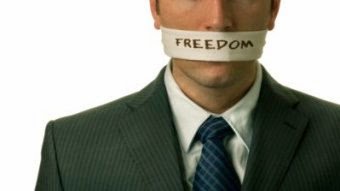
Freedom - Relative or Absolute?

Have been avoiding writing this blog because the last election result was so disappointing that I was quite sure I would not be able to maintain my neutrality. The last thing I want to see is my blog becoming one condemning piece after another. However there always comes a time that you know you have to start writing again because you are compelled to do so by your good conscience.

With the current Australian government personally I think things have gone from bad to worse. Sometimes it is hard to comprehend that this is what the general Australians think a government we deserved but voila, this is what we got stuck with at least for the next few years.

One of the most disturbing things I feel about is their use of freedom as a relative word. They championed themselves as freedom fighters and it has been deployed as the main reason behind the proposed change of the Racial Discrimination Act. The advocacy of George Brandis saying everyone has the right to be bigotry had raised a lot of people's eye browse. When the proposed changes were announced, my first question was "Why do a bunch of upper middle class White Australians think they understand racial discrimination and thus can change the Act when in their whole life had never been on the receiving end of such acts?" That is something I still have no answers to. The proposed change was to protect the freedom of speech and expression but was it for everyone or just for some?

Surely under such change I should be able to call Tony Abbott and George Brandis upper class trailer trashes who know nothing about the modern Australian society. But then am I really free to do so? I am not quite sure.

Take the recent threats the current government has on ABC about cutting their funding because in more than one occasion Tony Abbott said they should do more for the home team but ABC failed to do so. The fact that the current Government questions the existence of ABC because it is not churning out propagating materials for Tony Abbott and his gang directly contradicts to the basic act of freedom of expression and speech. To think about this if ABC can only survive because they became a propagating machine, what is the difference between the Abbott government and other totalitarian states that they condemned against regularly? Do they still have to rights to hail themselves as freedom fighters?

Another case is the threat of future legal actions on artists who pulled out of the Sydney Biennial Festival because of their political differences on asylum seekers issues. George Brandis said artists should be liable for these actions as they jeopardised the Festival despite their contempt that a guy whose company was running the detention centres chairs the Festival. I do not know how close the relationship of this guy is with George Brandis, and I do not know what legal obligations these artists have with the Festival. What I can assume is that these artists have checked their agreements and knew that it was within their rights to do so before pulling out. Is this good for the Festival? Certainly not. Is it their right to express their contempt? Certainly is. So if that is the case and the government want them to be litigated, is that a violation of the basic right to freedom of speech and expression? I certainly think so.

For me freedom should not be dealt with in a fluid relative term. This is what totalitarian authorities do. Freedom, if you do have the real heart to upkeep should be dealt with in an absolute social term - is it good for the society? If one thinks that people have the absolute right to be bigotry, then people should also have the absolute right to condemn such bigotry, disregarding where it's funding comes from. People should also have the freedom to pull out of events due to differences in political views within their contractual agreements. If freedom is not protected in this way, then it is not real freedom and thus enters an age of true hypocrisy. And in my opinion, this is the age most Australians are living in at the moment.


Monday, October 7, 2013

The Perfect Political System

Recent events in Australian politics had put me off writing social opinion pieces. Not that I have become less opinionated, but I just feel like I couldn’t be bothered anymore. The disappointment on both sides of the so-called Australian politics was just too overwhelming. However one of the discussions at tonight’s ABC’s “Q and A” got me thinking about something – is there really a perfect political system? Is politics ever meant to be for the benefit of the society?

These questions came about when they discussed about how China refuses to change politically but embraced western economic systems with open arms. They questioned how this is possible and whether this is, to an extent responsible. Now there is no doubt that China has become the core of the global economy. A lot of things, if not everything, are hinged on the Chinese market. When Deng Xiaoping opened up China economically, there was never an intention to change its core political ideology. This is why we have what we now called the June 4 Incident. The greatest concession China ever made was to establish the “One Country Two Systems” first with Hong Kong then with Macau. Even that, the autonomy is not complete and there were tensions from time to time over ideological controls.

People might condemn the political practice in China, but one thing I think a lot of people were never aware of was that China never really had a prolonged history of democracy. The Kuomingtang (KMT) Government was short-lived and corruption ridden, which I personally do not think left a good impression on the people of China at that time. Otherwise the Chinese Communist Party (CCP) would not have a chance to undermine them during the war against Japan, which eventually led to the civil war and the KMT fled to Taiwan. So strictly speaking, China has been mostly under dynastic rules of successive kings and then a one party rule of the modern government. The good part of this is that things get done. I personally do not think the Great Wall of China would come into being if it were under democratic rules. No matter how much people criticised the Communist Party, they did get things done and brought China back up from the “Slicing of the Chinese melon” status to now a major player in international politics. This is the strength of single power rule. Similarly, Hong Kong never had real democracy under the British colonial rule. And at that time lots of things got done and Hong Kong evolved from a small fishing village to now a economically important metropolitan. Looking at now, with people throwing bananas in the semi-democratic Legislative Council, councillors seemed to have lost sight of what they were supposed to do.

These kinds of issue do happen in the western democratic establishments. The recent Australian election was just a farce of who is going to be voted out rather than which capable person is going to be voted in. There is no doubt that Labor lost because people wanted to vote them out and the Coalition won because people wanted to vote the Labor out. Tony Abott is not a popular choice to represent Australia with his “suppository of knowledge” and his decision to shy away from “Q and A” to debate with Kevin Rudd but appeared on “Big Brother” to talk up the hotness of his daughters. Democracy as great as it sounds, at the end of the day is just another tool of the privileged few. This was further proved last week when the American Government was shut down because the Republicans were playing their political games. These politicians, under the banner of democracy were supposed to seek benefit for the general public they claim to be representing. However, the government shut down saga exposed that all they cared about were their own power at the expense of average families getting paid so they could pay their bills.

Another common thread in all political systems is the act of corruption. We always hear about how corrupted in China is because of the one party rule. There is no doubt about that. The system has become so nepotic that it is virtually a family and good friends business. However one thing people tend to forget is that corruption exists in western democracy too. Australian political scene is constantly marred by corruption from council to state levels. Australia might have better systems to detect and litigate corruptive acts but if they think they are better than developing countries and non-democratic entities, they are just see the spike in other people’s eyes without seeing the logs in their own.
Of course there is the issue of oppression and persecution that were commonly exposed under single power systems.  The Cultural Revolution would always be remembered and not to mention stories from Iran, Iraq, Syria and North Korea. However, does that mean under democratic rules there would be no persecution and oppression? I personally do not believe so. These practices still happen but unlike the red terror that involves blood, under democracy it became things that played out in courts or during parliamentary sessions where people expose each other’s dark secrets to shut other people up. Maybe the pen is mightier than the sword, but in politics both are equally deadly.


To be honest I do not have an answer to what political system is better. For me if Adam and Eve were not left to their own device, we could still be enjoying free lunches in the Garden of Eden instead of working hard to pay our bills. So it seems right from the beginning mankind is not capable of self-governing. God might have given us a brain to figure things out and thus all those political ideologies and system, but maybe at the end we still need a divine intervention to set us straight. Could this be global warming? I don’t know. But the question is if this divine intervention arrives, where could we go? As we are no longer living in any paradise anymore.


Monday, July 1, 2013

Hong Kong - 16 Years On

On 1 July 1997 Hong Kong was finally returned to the People’s Republic of China and thus ended 150 years of British colonial rule. It was a big day for China and a mixed one for the Hong Kong people. I was not there at that time because I preferred to keep myself distanced from this whole thing and went overseas to Hawaii for the sunshine and beaches. Nonetheless, I still watched the broadcast on CNN. I also spoke on the phone with my parents. That year that day, the sky was pouring torrential rain in Hong Kong and everything was drenched. I was joking about that with my parents saying that even the heavens were mourning over the change.

16 years onward, 1 July is still a day of mixed feelings for a lot of Hongkongese. This year under the torrential rain brought by a potential typhoon attack, around a 100 thousand people took it to the streets to voice their discontent with the current political situation. This is the 10th year for the 1 July demonstration. I personally had not participated in anyone of them as I moved overseas not long shortly after the handover. I was in need for an identity I could identify myself with. However this does not mean I care less (or couldn’t care less) about Hong Kong. I still have family and friends there and I still make regular visit to this Pearl of the Orient.

A lot of people continued to ask me whether Hong Kong has changed since the handover. My usual reply is “how could there be no change?”  Hong Kong was promised with 50 years of political stability and a status of autonomy through the establishment of the Special Administrative Region, and China seems to be keeping its promise. However, there were subtle things in the past 16 years that still triggered the nerves of the Hong Kong people. One of them was the progress for democratisation. The people of Hong Kong have been fighting for greater autonomy through a more progressive movement for democratisation, especially the ability to choose its own Chief Executive. However, the pace has been lacking and the discontent against this has grown with time. The fact is Hong Kong never had democracy and was doing very well, so why fighting for it now?

Personally, I think this reflects the continued distrust of the Hong Kong people with the Chinese government.  The irony is that in my opinion the Chinese government has been extremely tolerant with what is happening in Hong Kong and in fact has been pouring resources into Hong Kong to keep this place vibrant. So what cause this distrust prevailing in Hong Kong? One of the reasons I could think of was that China has never recovered from the image it established during the “June 4 Incident” in 1989. Certainly, there were already a few generations of leaders since then, but from the Hong Kong people point of view (probably also some international politicians too), it was a public display that the Chinese authority could turn hostile at any time and the only way to secure a stable and free future is to have democracy in Hong Kong.

Another reason for this fight for democracy was the incompetence of the current Hong Kong Government to present itself as autonomy. There were three Chief Executives since the handover so far and none of them was able to make the Hong Kong people feel “secure”. The first Chief Executive Tung Chee-Hwa proved to be incapable of governing despite earning the good wills of the Chinese authorities initially. Donald Tsang, an ex-government official who succeeded him was initially seen as a “Hong Kong local”. However, his background as an ex-colonial official and his position of being torn between the pro-China and pro-Hong Kong sectors exhausted his ability to govern. Further the later scandals about potential corruption had further tarnished his reputation as the Chief Executive. The latest and current Chief Executive CY Leung has long been regarded as the brown nosing kid for China who couldn’t be trusted. Further his dirty tactics during the “election” against Henry Tang and his repeated lies about his wrong doings uncovered by the media had further eroded people’s respect for him across the territory. However, in my opinion, the major concern for the Hong Kong people was that they did not exactly see these Chief Executives as their representatives to the Chinese authority. This is because they were elected by a small circle up high and the Hong Kong people never had a chance to choose.

For me being able to choose the Chief Executive of Hong Kong is a comforting move that the Chinese authority failed to see. It is not just about democracy but about the feelings that the Hong Kong people have. Simply able to choose who represents could them could make them feel that at least they were being heard. However, from the Chinese authorities’ point of view, they do not want to see anyone from the democratic camp to win the general election and become a sore in the eye for them. But what the Chinese authority failed to see is the great pacifying effect that a general election could bring to Hong Kong. The fact is once this aspect is being satisfied, Hong Kong would be a lot more stable and this could only work to the advantage of the Chinese government both economically and politically. This is not about ideology but practicality. At the end of the day, quality golden eggs could only be laid by a goose that is happily satisfied with life.

Sunday, June 30, 2013

The Big Brother Politics of Australia - The Recent Labor Leadership Spill

Ok the bloodbath is over. It was quite a frantic week in the Australian politics. There was yet another leadership spill and finally after several attempts Julia Gillard was removed and Kevin Rudd was reinstated. Watching this whole saga unfolding was like watching some bad reality series of six seasons – there is nothing left to exploit with the characters, so please move on to the finale already.

Although it feels like a cliff hanger on the day of the saga, it was of little surprise that Julia was finally replaced by Kevin.  Labor has been really bad in polls. As bullish as they wanted to be, they all know, well we all know, well the whole world knows that as long as the Liberals are willing to attend the party, the government is ready there at the buffet table in September. It is only a matter of how many dishes they could consume. So replacing Julia with Kevin is a desperate move at a desperate time for the Labor party.  The question now is how long would Kevin last? The thing is I don’t think Kevin is very popular still inside the Labor Party but he has become the necessary evil for the party to stay in power. What could happen is a year or two down the road they might try to replace him again. However, this would risk the Labor losing the remaining trust of the Australian public in them, and it would take a long time for them to recover from that (and this would be bad news for Bill Shorten).

As for Julia, she probably would “retire” and enjoy her latte (does she drink latte? Or would she prefer mocha or flat white?) for a little while with her 200K per year life pension before going back into her high paying legal profession or starting a consultation business for private companies. Either way, she is better off both financially and personally for life. A lot of people still think that Julia got removed because she is a woman. Seriously, this might play a part but then at the same time the truth is she never recovered from the “backstabber” image when she replaced Kevin 3 years ago. With this ghoul on her back, it would be hard for her to recover in any sense. And as much as a lot of people want to deny it, Australian politics has become a reality TV series and who wins the competition is based on image and popularity. Also Julia, as much as she wanted to do good the fact that we got one new tax after another after being promised with no new taxes at the last election just further cemented her image as a “liar” (although I personally did not agree with how certain media or media personalities treated her in this aspect).

So what are we, as Australians left with? Well, Tony Abbott now has a new A game to play against. And as a B game player, he would need to work much harder to get the job he desperately and unshamingly wants. In the past few years, he has been resolving to two roles only – producer of the series “Julia Gillard as a liar” and the producer of the B grade horror series “I Don’t Know What You Did Today and Ever After But It Is Scary Anyway”. Now with Kevin at the helm of the “New Labor” and he being the expert of those roles (we have already seen this from his “acceptance” speech), Tony Abbott needs to find new tactics to deal with this “new opponent”. The thing is Tony was never tested against Kevin. While Tony, despite his lack of intelligence speeches one after another, was seen as an easy win against Julia in the past few months. However, this last minute switch over immediately rings the alarm bell for the Liberals. Polls already showed a surge of support to Kevin Rudd against Tony Abbott. And for Kevin to stay in this honeymoon popularity, he only needs to continue exercising his charm and cashing in the last bit of sympathy from the Australian public. But for Tony Abbott, he really needs to step up with his intelligence and stop saying silly things such as “Malcolm Turnbull virtually invented the Internet in Australia” in the public (could you imagine him saying that when meeting other international heads of state?).  This is because Kevin Rudd would not hesitate to exploit all these silliness and further paints him as an idiot to the public. If Kevin Rudd is good with anything, he is a master of the reality show. He knows where he could solicit public support and let his opponents to undo themselves and go under.

Without a doubt the reality series of the Australian politics has got a dramatic turn last week. But how long would this sustain the public’s interest is still yet to be seen. The next few months would be crucial as I could see that the Liberals would not hesitate to play dirty (as they always do) while the Labors would be taking every opportunity to milk any mishaps from the opposing camps. As for the Australian public, unfortunately they would have no choice but continue to follow this reality series for as long as it lasts.


Wednesday, June 19, 2013

The Fight of 457 Visa

The recent debate about the change of the 457 Visa requirements has sparked debates on whether it is a racist policy in the public arena. For readers overseas, the 457 Visa allows employers to sponsor overseas workers to Australia to “fill certain skill gaps”. However, after the repeal of requirement in 2001 by the Liberal Howard Government to mean test the skill set shortage to do so, it has been regarded as a means for some employers to just freely import foreign workers at a lower cost. This puts the local Australian workforce at risk as they are competing at a lower wage with foreign workers who might have similar skill sets. The situation is similar to bringing manufacturing outsourcing at a lower cost into the country.

The Labor Party is keen to change it to reinstate the requirement for skill mean testing so the system would not be, according them, “rotted”. While the Unions are very welcoming about this policy change, it is not so much with employers who claimed that it would make employing foreign workers harder and “does not meet the labour market needs”. As missiles were shot all over the place, especially with Don Randall, a Liberal MP said the policy as racist, I can’t help but think, is that so?

As a migrant myself, I look at the situation from a different point of view. While the 457 Visa gives foreign workers are way to come to Australia, are we doing it in the right way? Certainly, there might be skill sets and expertise that are not available, especially when we talk about high level positions or highly specialised professions, but for example, is it really that hard to find, for example a baker for a bakery that operates by Mr Randall? I don’t want to sound sarcastic or anything, but with hundreds of people trying out Masterchef every year, and now a new reality series just about baking, is it really that hard to find a local baker to do the baking for Mr Randall? Or is it actually just cheaper to hire one from Vietnam (as he did) and lower the overhead? Is Mr Randall really passionate about the diversity of the Australian society or he is more passionate about more bread at a lower cost?

What really bugs me about Mr Randall’s comment is his using of racism as an attack to the bill. I mean seriously? Certainly now even in the Parliament there is a reflection of cultural diversity with Penny Wong becoming the sore in the eyes for a lot of Liberal MPs, so how is a policy that helps the ethnically diversed Australian workforce racist? The thing is, in case Mr Randall does not know, Australia, I mean modern Australia, not the one Mr Randall might have grown up in, is made up by a huge diversity of ethnicities. So can I ask Mr Randall how in the world that a policy aiming to protect this huge diversity of people in Australia be considered as racist? I am Australian and I don’t think it is racist. If Mr Randall thinks that by throwing this out he is doing his "White Man Duty" to protect the minorities, maybe it is a bit 20 years too late.
As some said the policy is xenophobic, maybe it is from a certain angle, but then the policy change is not about shutting out people from Australia but to ensure that employers source for suitable candidates within the country first before going external. This applies to a lot of companies that usually open up new positions internally first before going out to external recruitment when a candidate for the position could not be found. So from this angle, I don’t see how the policy is xenophobic. With projected unemployment rate hitting 6% in Australia soon, isn’t it the Government’s duty to protect the Australian workforce? If you look at other countries in the world, you might understand that working overseas, for example in the States is not as easy as you think either. So why should Australia give employers who only want to import cheap workers a free ride?

How the whole saga would unfold is still yet to be seen but I personally do think that if a policy is about promoting fairness to the people that a Government is responsible for, then people should put away their personal agenda, be it to just say no to a cabinet he doesn’t like or just felt that he would be gravely affected, to support that is something generally good for the Australian society. Then again, as I usually do, do these politicians actually care about the Australian public? Or they care more about their own jobs and financial security?

Forget Me Not? - June 4 1989

I have been avoiding writing a piece about the June 4 Incident around that time to avoid getting too emotional and not objective enough. It is more than a week after that day so I think I could start writing now.

On 4 June 1989 the Chinese government mobilised its army to “clear the venue” of protestors. The event was termed differently in different countries. While in Hong Kong we termed it as the June 4 Incident, in most parts of the western world it was regarded as the “Tiananmen Square Massacre”. That night a lot of people died, more people’s souls did too.

Fast forward to present, nearly 25 years after that fateful night, the Chinese community in Hong Kong is still commemorating this day; and for the west, probably less so. However, this year in Hong Kong, for the first time there were people saying that we should forget about the June 4 Incident and move forward. These suggestions ignited another series of debates across the semi-autonomous Chinese territory.

Hong Kong had undergone a lot of changes. Whenever people knew that I was originally from Hong Kong they are interested to know whether Hong Kong has changed since the hand over in 1997. I would tell them change is expected so of course there are changes. While changes are structural and political, core values seemed to be remaining quite intact. Hong Kong is still a “work hard and live a good life” kind of place. However, as the wheel of time continues to turn, ideologies in Hong Kong have evolved too. I remember earlier this year when I was back for a family affair, I saw a TV forum discussing about what does it mean to be a person who loves his country – referring to China. The slogan of “Loving China, Loving Hong Kong” has been around for ages since the hand over, but the meaning differs to different groups of people. At the forum there was a girl representing the “China came first” camp. As I watched the debate unfolded, I was astonished by the bullying attitude she had whenever the discussion did not go her way. She would point her finger and tell people off in an authoritative way and also trying to shut people up by talking over them. My jaws dropped as I had never seen anything like that on Hong Kong TV before. TV forums are known to be civilised and rational, until that night.
At that time I thought “Yeah Hong Kong really has changed” and didn’t think about it much further. However, the recent comment from some people about forgetting June 4 really triggered a nerve in me. I was disappointed – how could you forget an incident when so many people lost their lives in one night? Not matter what your take is on this event, it is still in our history and forgetting this part of the history is not something that anyone should do. Does that mean we don’t need to learn anything about this anymore? Does that mean that lives lost are no longer valuable anymore? Or we are just applying the “Winner takes it all” principle to this pivotal historical incident in the Chinese history? Surely time had moved on and so does life, but then when we talk about June 4, it is not just something that should be taken lightly. China certainly doesn’t when you see how they usually tighten security in Tiananmen Square every year around this date. So if the Chinese government has not forgotten about this date (surely they learnt something out of this disregarding the outcome) should the people of Hong Kong be doing so? If Hong Kong no longer cares about what it stands for in Chinese history, is there still a role for Hong Kong being a Special Administrative Region in China? These were the questions I had in my head at that time.

Certainly, I don’t want to get too emotional or worked up about this whole thing, but then I did feel that if one wants to erase the June 4 Incident, they are no different from  people who wanted to erase the fact that Japan did invade China during the World War II. If they want to remember the latter, they have to remember the former – one cannot be so double standard about history, especially history involving the loss of lives. In my opinion, any suggestion to discount something of such importance is a step to the dark side of humanity – and that would bring no good to anyone.


Sunday, May 26, 2013

Council Merger a Political Game?

The recent debate about the merging of councils is another demonstration of political arrogance. Currently there are about 37 councils around Sydney. Each of them is responsible for dealing with local issues from approving development of properties to keeping the streets safe from fallen branches. The talks of merging councils were along the line of operational efficiency and economy of scale. However, as a person who has appreciated what my local council (Randwick) had done for the area, I seriously doubt the motivation behind this is purely operational.

I don’t want to point finger to anyone but it was already pointed out by academics that merging councils could not achieve economy of scale so that particular argument is already proved to be bogus. However, as a common local resident, I could see all the detrimental problems that could be caused by such merger.

First of all, local councils operate within the local setting. Thus they are more familiar with what is happening locally and what the local concerns are, and more importantly where do those concerns come from. Just think about this, residents of Leichhardt, an inner west suburb would have different concerns as compared to residents of say Coogee, a beach side suburb. The reasons behind these concerns would be completely different even if it looks like they are the same e.g. a development proposal application for expanding a house or building an apartment block. With a mega council that focuses on “efficiency” and economy of scale overseeing these diversely different areas, I doubt any in depth investigation would be carried out to sort out the rationale behind these seemingly similar concerns. What would result is that a “one-size fits all” solution to be applied to similar issues that would in the end resolve nothing and left everyone unhappy.

Another potential issue that I can see with the merger of local councils is that there would be a lack of understanding of the local situation. For example, if the new headquarter of the mega council was located in the city people would be commuting to the city to work. Unless these people needed to travel from the relevant suburb to work, they would not have a sufficient understand of local situations to carry out informed decisions. For instance, a mayor who lives only in the inner city suburb would not be able to understand traffic situations in the roads around the Prince of Wales Hospital in Randwick during the peak hours unless he / she makes an effort to go there. Even so, without a day in day out experience of the local situation, there surely would be gaps in local knowledge about these situations. Under such circumstance could we still rely on the mega council to make correct and informed decisions?

Also no matter how the structure of the new mega council is sculpted one question remains – who is going to make decisions of local issues? How many layers of bureaucracy is required to have an application or complaint being dealt with? Also with so many areas involved, how are jobs being prioritised using standards that are fair and equal to residents of all areas? I wonder whether all these logistic issues were considered before someone throwing out such merger proposal in the name of economy of scale. Personally I think helping residents is not just about saving money but what you can really offer. If you lose sight of this there is no point of being in a government service, which I think we already have enough half-hearted politicians in the State and Federal levels. Also we have already throughout the years witnessed the detrimental effect of decisions made purely out of the aim save money. What we need is better financial management for certain councils not merge them to save money.

If the purpose of the merger is for economy of scales, there bound to be restructuring and lay offs in the mega council to trim “duplicate functions” that currently reside in individual councils. That could leave us with less people doing the same job because a number of roles were considered as “duplicate” locally. How would that be more efficient then? People who propose that might argue that this would not happen but to be honest, have we seen any merger in history that did not result in restructuring and layoffs?

Further, one of my biggest concerns is about the responsibility of these mayors after the merger. When a mega council is created, it will cover suburbs of greatly diverse cultures and people. However, to get re-elected, extensive local approval is completely out of the window as people who want to be elected only need to focus in certain areas, e.g. wealthier suburbs like Potts Point and Darlighurst. This lack of need for local approval as a scrutinising mechanism of performance for councils would only contribute to further dis-engagement of the mega council with certain localities. I personally do not think that this is a healthy way to go to manage local areas and suburbs.

One of the arguments about merging the councils is to reduce the chance of corruption. This argument lacks weight in my opinion as corruption happens if it needs to happen, no matter what your structure is. The only way to avoid corruption is to have tougher sentences and more comprehensive administrative mechanisms to avoid them. Also education is key to reduce mechanism. Corruption is an evil that I personally do not think could be eliminated by any structural management. It would be naïve and unrealistic to put this as an argument for the formation of a mega council.


I personally genuinely hope that this merger would fall apart. However, if the call is in those politicians’ hands, I doubt that this kind of consultation would end up in a non-merger. I sincerely hope that some responsible local mayors would have enough weight to stop this kind of crazy ideas to become a reality.


Saturday, May 18, 2013

One Country Two People


It is no secret that since the opening of Hong Kong to Chinese travellers tensions between the two areas have been building. The difference in culture and life style had become more and more apparent and clashes in these areas have escalated discontents between the two groups of people under the One Country Two Systems rule. These issues were brought to the forefront earlier this year when a new television show portrayed them point blank at the audience. There were backlashes and supports alike. The New York Times even covered that in one of their articles.  But the issue here was, if these problems do not exist there would not be material to be put on. Further does avoiding such issue by not talking about them help at all?

The show went on from being sanctioned in China (the southern region of China can receive television signals from Hong Kong, but all ad times and news were replaced by “local” contents instead) to become one of the most popular shows in Hong Kong as people started to appreciate it in a different light. But the issues that were raised continue to exist and continue to pose problems across the borders.

Opening Hong Kong for Chinese tourists to visit was a measure adopted to save the Hong Kong economy during the Global Financial Crisis (GFC, which was also known as the Financial Tsunami locally). The measure did save the Hong Kong economy as a lot of wealthy Chinese tourists took advantage of this opportunity to come to this shopping paradise and buy genuine products (as compared to the predominance of counterfeit products in the mainland). This kept the retail business alive and thus the general economy. It was a great move, but then it opened up something that was more deep-rooted – the difference in life style and perception between the very distinct groups of people.

Hong Kong people have prided themselves as the more etiquette trained and sophisticated group as compared to the mainlanders (people from mainland China). The colonial rule probably had done good to “class up” Hong Kong in a way that common social etiquettes were well observed and respects for others are highly valued. So it is not surprising that the more “earthly” behaviours of a number of Chinese visitors continued to cause discontents among the Hong Kong residents. Before the influx of Chinese visitors, in the up market CBD and shopping areas, there weren’t people squatting along the streets smoking. Also spitting in the streets was virtually eliminated after decades of continued education. So it is not surprising when all these happened, a lot of Hongkongers were very upset. However, this was tolerated at that time because they needed these visitors for the money.

However as the economy recovers and the need for this money lessens, Hongkongers have become less and less tolerant. At the same, the mainlanders who still think that they are “doing Hong Kong a favour” have grown more and more arrogant. Under such circumstance, clashes are bound to happen. Last year when a certain brand name specialty shop started to blatantly practice favouritism to mainland shoppers (which was understandable as these shoppers do shop without considering the price), it caused an outrage among the Hong Kong communities. Further when stories about the complete lack of respect to the Hong Kong society by mainlanders such as parents asking kids to urinate or even excrete on public transport or in front of other people’s shops surfaced, tensions between the two groups of Chinese immediately reached new levels.

In the midst of all these, Hongkongers is by no means pure and innocent either. There were local companies that organise these tours aiming to rip off mainland tourists. Stories about tourists being forced to shop at overpriced outlets were not uncommon. These so called “shopping tours” were very cheap to sign up for but people who joined would be butchered financially during the trip. These unsuspecting victims soon started to fight back by complaining and going to the media. Calls for compensations were frequent. Funny enough though, it seems that recently some of these mainlanders were skilful enough to even exploit these by signing up and then complain to the media asking for compensations that were a lot higher than their sign up costs.

Having moved overseas for some time now, I was repeatedly told by my friends in Hong Kong that I am lucky that I do not need to tolerate or deal with these mainlanders. Nonetheless, I was by no means immuned from them during my last visit home. Mum and I were at the check out of a shop in Tsimshatsui, one of the major shopping districts, when mum was pushed aside aggressively (they nearly knocked her down) by a group of Chinese women jumping the queue to the cashier. I was shocked to experience this first hand but immediately could understand the anger of the Hongkongers when considering this is what they are dealing with day in day out.

There is really no easy solution to this. The mainlanders and Hongkongers are basically two distinct groups of people. As nice as it sounds to have a unification the social differences would continue to exist until the current generations of Hongkongers disappear. But this will take decades to happen. The lack of intervention form both sides of the border did not help either. It seems that at this point it is really up to the civilians to tackle this difficult problem, but I don’t see either party would be giving in. I am sad to see that it comes to this but then being sad about something that has no solution did not help either. I just sincerely hope that one day this could be resolved in a civilised manner and the two territories could have a real unification for the better of the Chinese race, if that is going to happen at all in my life time. 

It was a glorious moment for China, but has the shine worn off?

Sunday, May 12, 2013

An Election With No Selection


As September is drawing closer and closer, I feel more and more torn about the whole Federal Election thing. This is the second time that I don’t really want to vote for anyone in an election.

Democracy gave us an illusion that we have a choice but in fact from the Australian politics perspective that choice does not exist. Well, it does exist but how do you choose from candidates who, one of them does not seem to know what she is doing or saying but just asking for more tax payer money and the other who only cares about adding the Prime Ministership to his CV and does not care a darn about the general Australians? In the last election, we still have a stronger but smaller party to choose from but this time round, that option is gone too as it seems that they have lost the plot too.

At the moment there is no best bet for the September election. If I chose Labor , then I will be participating in another round of fiasco of mismanagement and lack of vision. Probably more tax increase because no money for other things. However I am always surprised that when it comes to their own welfare there is always money. I still continue to question about why retired politicians who are receiving huge sum of money as consultants for private businesses need the Government to provide an office at Macquarie Street while they don’t need it. Also why do we need to pay for their airfares every year when they have more than enough money to fly business class or even first class themselves? Every time a new tax is introduced I question that. Even worse was the recent news that the Labor Government just increased the payout of severance packages for people in their offices if they did not get re-elected – which is quite obvious this is a hush hush approach to save their financial asses.

As for the Liberals, they are really nothing liberal about. They are against basic human rights such as marriage equality. Now I don’t want to get into the whole religious debate. For me it is not about religious righteousness but about basic rights. Faith and believe is a very personal relationship between an individual and God, and I do not condone using your religious agenda to achieve personal preferences. Not allowing people to get married because of your personal religious agenda as a Catholic is similar to what you attack about the Muslims. Yes Tony Abott I am looking at you. Further Tony Abott is not the most religious Catholic in the world for he nearly had an illegitimate son! Who is he to cast the first stone and cry foul to marriage equality? Also the Liberals lack of vision about the NBN project is a blatant way of putting Australia’s economic success in the future in jeopardy. Do they really care about Australia? Or they just care about whether they have enough money for their retirement funds in the future?

As for the Greens, well I really got nothing more to say about them except having my face’s colour turning green when I imagine them to become a ruling party (which they would not anyway). While I appreciate a lot of their efforts and their visions, nothing much was accomplished in the last few years apart from showing that they do have a say in the Parliament.

Seriously in the last three years, the Australian political scene showed us nothing but fiasco and stupidity.  Apart from more taxes being introduced and people yelling at each other and throwing names at each other each week, what has been done? Julia’s speech on misogynist will still go down as one of the great speeches for women politicians but Australia needs a Prime Minister who actually has a clear vision and at the same time the ability to bring this vision to reality. Julia Gillard might have a vision but at this stage she seems to lack the ability to carry that out. As for Tony Abott, he is neither a visionary nor a capable person from what he exhibited in the last three years. He just look like a spoiled brat who knows nothing about life but just want more from his supporters. If he became Prime Minister (which probably he would) Australia could enter a long period of dark age for nothing would be done because Tony Abott will just be focusing on staying in power and getting rid of differences in the party and the Parliament. Debates will become talk shows that don’t even scratch the surface of any social issues.

I wish the No Parking Meter Party was a federal level political party as at least its agenda is out there and I do genuinely do not like parking meters in certain areas. 


Tuesday, April 30, 2013

ICAC Vs ICAC


Recently got quite disturbed by a piece of news in Hong Kong. The ex-head of the Independent Commission Against Corruption (ICAC) of Hong Kong Timothy Tong Hin Ming was reported to have involved in corruptive acts while he was still on the job. Reports have it that he was spending public money to hold and invite Chinese officials to banquets and providing them with expensive gifts. Also involved in this was his partner, who was also using the ICAC money to attend these functions. It was revealed that during his office Timothy Tong had hosted more than 20 lavish banquets for top office holders in China and spent over HK$200,000 on expensive gifts to these Chinese officials.

At the time of writing the Timothy Ton had gone into “hiding” and still has not come out to explain his actions nor was there an official inquiry to this whole mess. The Chief Executive of Hong Kong Leung Chun-Ying seems to be unwilling to get involved at this stage claiming that the ICAC should complete their own investigation before other public inquiry should be carried out. There were also ex-ICAC officials coming out trying to salvage the now tattered image of ICAC claiming that Timothy Tong does not represent ICAC and so people should not judge the operation of ICAC according to the behaviour of this person. At the same time other ex-ICAC officials have started a petition for a public enquiry into this whole saga.

There are several things that troubled me in relation to this whole thing.

Firstly, The Chief Executive of Hong Kong, Leung Chun Ying did not come out to make a statement immediately. His first public statement was only made two weeks after the news broke. Yes he might want to have more information before making a formal statement but then as a responsible Chief Executive, two weeks is too much considering that this is not a trivial issue – corruption claims against the body set up to fight against corruption. There are members of the Legislative Council who criticised Leung for trivialising this matter, which I do not blame them for their frustration and anger. Seriously, does Leung think that announcing no National Day fireworks is more important than making a statement and stand on the corruption claims on Timothy Tong? As the head of Hong Kong, it really baffles me about his ability to prioritise work.

The other thing that worried me was that so far there wasn’t a list of those Chinese officials that Tong was “building relationship” with. I do not know whether such a list exists but then it would be important for the public to know who these people are so that transparency could be achieved when it comes to a fullscale investigation. Who these people are could help to reflect Tong’s motivation to shower these people with gifts and inviting them to lavish banquets. I supposed maybe it is hard to obtain such a list as this would get the Chinese Government involved, but two weeks on the lack of transparency on the Chinese side was quite astounding in my opinion, especially the new head of state had publicly announced that he was determined to fight corruption in the Chinese Government.

Thirdly, Timothy Tong was still not “invited for coffee” (this is the local slang for being investigated by ICAC) and is still hiding from the public. Although there were reiterations that ICAC will conduct an internal investigation on this matter, but the fact is under such circumstance whether an internal investigation could help to rebuild the image of ICAC that was destroyed by Timothy Tong. An investigation might be an established procedure but the fact is we should assess the impact of this matter. Timothy Tony is not just any official he was the head of ICAC, a public person representing ICAC when he was in the office. Under such circumstance I personally do not think that an established internal investigative process would be sufficient to rescue what is left of ICAC after two weeks of intensive negative press.

This whole saga makes me really think about how serious is the current Hong Kong Government when it comes to fighting corruption in the territory. Or is it that now Hong Kong is part of China the new Chief Executive just thinks that Hong Kong should “blend in”? It pains me to see that while the press is following this matter intensively, the Hong Kong Government just sits there and waits it out. If that is the attitude of Leung Chun Ying about this matter, what is left for doing “clean business” in Hong Kong? Hong Kong spent decades to build up a clean business image to achieve it success today, does Leung Chun Ying still care about it or is he just happy to have the position of Chief Executive of Hong Kong on his CV and cares about nothing else? That is the question I have.


Wednesday, April 17, 2013

Culturally Challenged? The Future Cultural Policy of Sydney


Went to a forum held by the Belvoir Street Theatre the other night. It is an open discussion of what the future cultural policy of Sydney should be like. At the forum Rachel Healy, the Executive Cultural Manager was there to understand the concerns and to answer some questions. The current discussion paper was to develop a more cultural Sydney, and in order to develop a more cultural Sydney the voice of the artists must be heard. I am glad that Belvoir Street Theatre held this forum, as I think nothing is better for the officials to hear the voice directly from the artists.

I kicked off the forum with my own questions. I queried about how does the City of Sydney define the culture of Sydney? What is the culture of Sydney made up of? I pointed out that Sydney is a truly multicultural city but was that reflected in the culture of Sydney? Cultural activities for ethnic groups are more compartmentalised and despite they were seen, they could hardly be considered as being part of the culture of Sydney. They look exotic as flavours of the month but did Sydney take advantage of its cultural diversity and integrate this unique element into the greater culture of Sydney? I pointed out that non-Anglo performers especially actors are having hard times looking for work and the situation has not improved with some of the major players in the field. Is the greater Sydney culture ready to recognise multiculturalism as part of it, or multiculturalism is still going to be restricted as individual events on the calendar? If we could have fusion food, why the culture of Sydney cannot be a “fusion culture” that integrates elements of all cultures that built up the city?

Another point I raised was the fact that bureaucracy is working against developing a culturally rich Sydney. While we understand that even as artists we need to be responsible, but when you spent three weeks putting together a grant proposal and only after three months you were informed that you did not get it because it was given to a more experienced applicant, the first thing you would have in mind is, so how could I improve and what did I learn from this experience? I raised that currently there is no mechanism to guide and help new artists and applicants about how to approach the behemoth of that application proposal and if feedback was not given, people won’t be able to learn from the experience and would feel frustrated after all the time and efforts that were put in. There needs to be bigger transparency and assistance for artists to apply for funding so that they could truly help to build a more cultured Sydney. In response to that there were other artists in the room that raised similar concerns and issues. The general understanding was it is too hard to acquire funding and as most artists are not well off, that discourages artists to put out work and continue to develop.  There were recommendations such as doing fund matching when a project could kick off the ground through social fund raising platforms such as Pozible and Kick Start, providing low cost space for artists to get together to develop their art forms, and fully utilise long term deserted space through policy making etc.

For me, I personally think that in order to have a viable cultural policy for Sydney, the most important thing is to have a culturally educated or open-minded bureaucracy. As it was pointed out during the forum, the State Government is willing to invest a lot of money into sports but when it comes to cultural events or performing arts, they became the unwanted kids. There will be little bit of funding to keep them alive so they could not be condemned of child abuse, but then whether it is enough for them to develop healthily that is another question. I am not saying that sport is not part of Sydney’s culture but the truth is that there are more to it. A culturally educated bureaucracy could provide a stronger understanding and support from the artists’ point of view through understanding their concerns better.  Then when it comes to funding decisions and policy making, these concerns are thoroughly considered in an informed manner. Crafting a cultural policy is more than just holding individual events during the year. A culture is a deep-rooted ideology that materialised through the efforts of the people who built it. You may not be aware of it in daily life but then when it was mentioned, everyone notices and agrees with it.  At the moment, if the officials at the City of Sydney could not even understand the cultural significance of the rainbow crossing on Oxford Street, I personally think that there is still a long way to go for Sydney to build its own unique flavour of culture that people would identify to.

I will have another thorough read of the discussion paper and put in my response further in writing. In the mean time if you want to have your say on this subject too go to: http://sydneyyoursay.com.au/, have a read of the discussion paper and respond to it.